Elisenda of Montcada, The Queen Who Ruled from a Monastery
New research at the Royal Monastery of Santa Maria de Pedralbes reveals how Queen Elisenda of Montcada shaped power, memory and burial culture in medieval Catalonia.
A medieval queen’s tomb in Barcelona has opened an extraordinary window onto the lives and deaths of a powerful female community in fourteenth century Catalonia. The new research at the Royal Monastery of Santa Maria de Pedralbes shows how one tomb (tumba) can reveal political authority, religious identity and hidden burial practices. The study focuses on eight foundational burials connected to the monastery’s earliest period. It has already changed ideas about who was buried there, how the tombs were used and how memory was preserved inside one of medieval Barcelona’s most important religious houses.
Researchers began the project in late twenty twenty four as part of the monastery’s seven hundredth anniversary. Their work has examined the remains of twenty five individuals from burials dating to the thirteen hundreds. The investigation combines archaeology (arqueología), physical anthropology, conservation, archaeobotany, textile analysis, radiology, three dimensional documentation and paleogenomics. This broad method allows specialists to study not only bones, but also fabrics, plants, wooden containers, burial positions and traces of ritual.
Queen Elisenda of Montcada was the fourth and last wife of King James the Second of Aragon. She was born around twelve ninety two into the powerful Montcada family and married James in thirteen twenty two. Her position gave her access to royal politics, aristocratic networks and religious patronage (patrocinio). In thirteen twenty six she helped found Pedralbes, and in thirteen twenty seven the monastery was consecrated for the Poor Clares, a Franciscan female order.
After James died in thirteen twenty seven, Elisenda did not disappear from public life. She moved to a palace built beside the monastery and lived there for the rest of her life. From that position, she remained close to the nuns (monjas) without formally becoming one of them. She continued to influence the community, issue ordinances, manage patronage and protect the memory of her authority.
Pedralbes was therefore more than a place of prayer. It became a carefully organized female center of power, shaped by royal money, noble women and religious discipline. The monastery’s early community shows how women (mujeres) could exercise influence through property, ritual, family alliances and spiritual authority. In a medieval world often described through kings, bishops and warriors, Pedralbes reveals another form of power built inside the cloister.
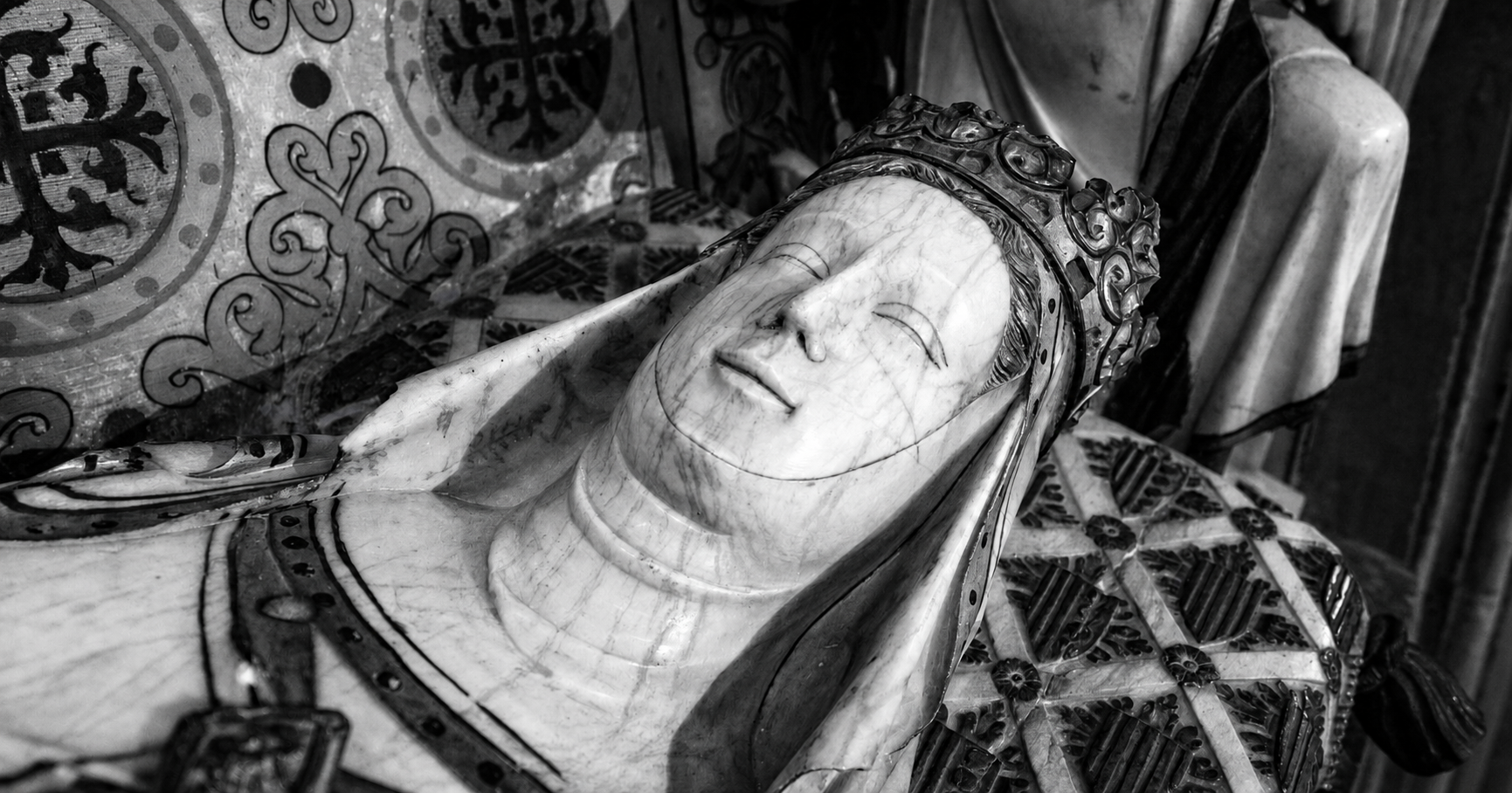
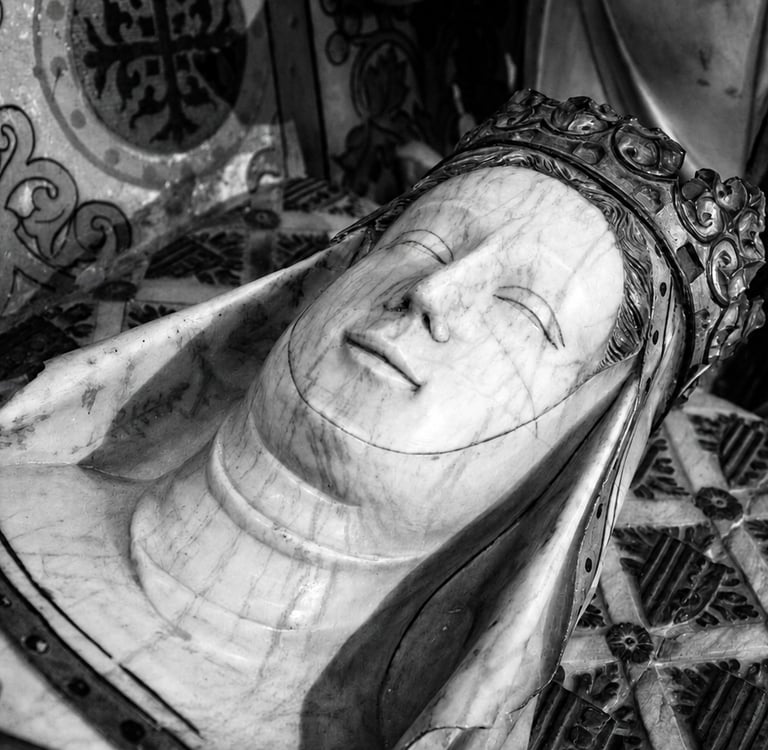
Elisenda’s tomb expresses her double identity with unusual clarity. It stands between the church and the cloister, making it visible from two different worlds. On the church side, the monument presents her as a crowned queen (reina) dressed in royal clothing. On the cloister side, it shows her as a penitent widow dressed with Franciscan simplicity.
This artistic design was not accidental. It communicated that Elisenda remained both royal and religious, powerful and humble, political and devotional. Her tomb made her identity (identidad) visible to different audiences depending on where they stood. The nuns saw one image, worshippers saw another, and both images preserved a carefully controlled memory of her life.
The new investigation confirmed that remains attributed to Queen Elisenda were found inside a medieval wooden box. Initial anthropological analysis indicates that the remains belonged to a woman of about seventy years old. The skeleton showed age related pathologies (patologías), consistent with an elderly woman who had lived a long life for the medieval period. These findings fit historical accounts that place Elisenda’s death in thirteen sixty four.
The burial also suggests deliberate austerity. The remains were associated with simple clothing, probably connected to monastic dress. Yet researchers also recovered silk (seda) fragments with metallic thread. This contrast matches the image Elisenda created for herself, humble before the religious community but never fully separated from royal memory.
The discovery does not answer every question. Genetic work and additional scientific testing are still in progress. Future analysis (análisis) may clarify biological identity, family relationships, geographic origins and possible health conditions. Even so, the tomb has already become a major source for understanding how a medieval queen shaped the story of her own death.
The project has also challenged several older assumptions about other tombs in the monastery. Some burials that were once thought to belong to single named individuals actually contained multiple people. In the tomb traditionally associated with Artau de Foces, researchers documented the remains (restos) of two women and three children rather than a single male body. This finding shows that names attached to medieval tombs can sometimes hide more complicated histories.
The tomb of Francesca Saportella, the monastery’s second abbess and Elisenda’s niece, was even more complex. It contained at least nine individuals from different periods. This evidence suggests that the sepulchres (sepulcros) were reopened, reused and reorganized over time. They were not always fixed spaces for one person, but could become layered places of memory, family connection and institutional continuity.
These discoveries are important because they change how historians understand medieval burial. A tomb was not always a sealed monument with one stable meaning. In Pedralbes, burial spaces could reflect reburial (reentierro), changing community needs and later acts of remembrance. The dead were not only placed in the monastery, but also moved, grouped and reinterpreted by later generations.
The research has also revealed funerary practices that were previously little known at Pedralbes. Some bodies were wrapped in textile bundles or funerary sacks. Others seem to have been placed directly inside burials (entierros) without the same kind of container. These differences suggest that status, timing, ritual preference and practical circumstances all shaped how the dead were treated.
Objects and plant remains add another important layer to the story. Researchers found evidence connected to candles, cords, floral offerings and aromatic plants. More than two hundred archaeobotanical samples have revealed plants (plantas) associated with funeral rites. Some may have had medicinal, symbolic or liturgical meanings, while others may have been used to scent the tombs and structure the sensory experience of mourning.
The study of textiles is equally valuable. Cloth can preserve information about status, religious identity, burial preparation and trade networks. The survival of textiles (textiles) such as silk with metallic thread shows that even a simple burial could contain signs of elite memory. These fragments help historians understand how clothing and fabric communicated meaning after death.
The human remains examined so far mostly belong to adult women. Some of these women reached advanced ages for the medieval period, while children and adolescents were also present. Bioanthropological study has identified injuries (lesiones), osteoarticular conditions and possible metabolic disease. These physical traces help reconstruct the lived experience of a high status female religious community.
Such evidence matters because written records usually privilege names, titles and donations. Documents can tell us about queens, abbesses, noble families and legal arrangements. Bones and objects reveal the body (cuerpo) behind those records. They show how women aged, suffered, healed, were cared for and were remembered after death.
The project also points to the importance of female leadership in medieval Catalonia. Elisenda did not rule a kingdom from Pedralbes, but she shaped a powerful institution that preserved her authority for centuries. Through the monastery, she turned religious devotion (devoción) into a political and cultural legacy. Her example shows that medieval women could build lasting influence through foundations, patronage, memory and control of sacred space.
Pedralbes itself is one of the great monuments of Catalan Gothic architecture. The monastery preserves a church, cloister, chapels, domestic spaces and works of art linked to centuries of female religious life. Its architecture gives physical form to community (comunidad), hierarchy and devotion. The tomb of Elisenda, placed between church and cloister, remains one of its most powerful visual statements.
The investigation will continue through twenty twenty six and is expected to run until May twenty twenty seven. Pending work includes radiocarbon dating, dye analysis, expanded ancient DNA research and further study of documentary materials. These methods may help refine chronology (cronología) and clarify how different individuals ended up in the foundational tombs. They may also reveal whether some of the buried people were biologically related.
For now, the opening of the Pedralbes tombs has already done more than recover a queen. It has revealed a medieval world in which women shaped property, ritual, memory and political authority from within monastery walls. The study shows how science can transform a familiar monument (monumento) into a new historical archive. In Pedralbes, the past is not silent, because bones, fabrics, plants and tombs are beginning to speak again.
Key Spanish Vocabulary
tumba tomb
arqueología archaeology
patrocinio patronage
monjas nuns
mujeres women
reina queen
identidad identity
patologías pathologies
seda silk
análisis analysis
restos remains
sepulcros sepulchres
reentierro reburial
entierros burials
plantas plants
textiles textiles
lesiones injuries
cuerpo body
devoción devotion
comunidad community
cronología chronology
monumento monument
For enquiries or suggestions: pr@instituto-espanol.com
Come visit Spain!
© Copyright 2026 Instituto Español
Learn the official language of Spain in 30 days thanks to the most complete Grammar, Vocabulary and Culture courses available. Start speaking Spanish today!