How Spain’s Unemployment Rate Caught Up With Finland’s
Spain’s labour market has improved while Finland’s has weakened, showing how migration, reforms, demand and economic shocks can change employment trends in very different ways.
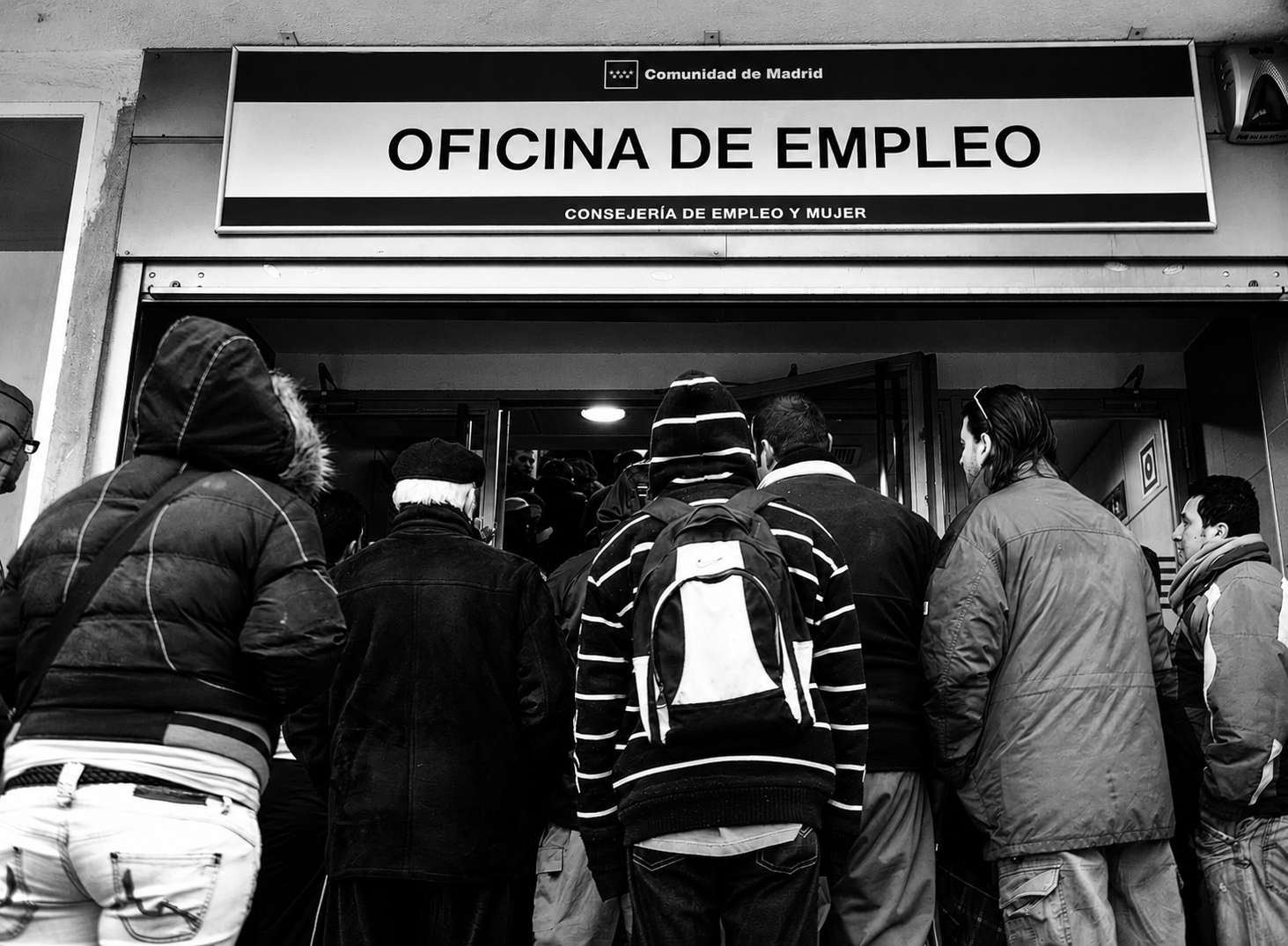
A decade ago, very few economists would have expected Spain and Finland to have similar unemployment rates. Spain had long been associated with chronically high unemployment (desempleo), especially after the financial crisis and the eurozone debt crisis. Finland, by contrast, was often seen as a more stable northern European economy with stronger institutions, higher productivity and a better record of social protection. Yet in 2026, the two countries have moved surprisingly close together, with unemployment in both cases around ten per cent.
This convergence does not mean that Spain and Finland have become similar economies. Spain’s labour market still carries deep structural weaknesses, including high youth unemployment, regional inequality and a long history of temporary work. However, Spain has recently benefited from a powerful recovery (recuperación) in tourism, services and domestic demand. Finland, meanwhile, has been hit by weak growth, pressure on exports and the economic consequences of Russia’s full scale invasion of Ukraine. The result is that Spain’s position has improved while Finland’s has deteriorated.
For Spain, the story begins with the strength of demand after the pandemic. Tourism returned quickly, cities filled again with visitors, and hospitality, retail and transport businesses needed more workers. The rebound was not limited to tourism, because non tourism services (servicios) also expanded as households resumed spending and companies restarted investment. EU recovery funds also supported public and private projects, helping to create jobs in construction, digitalisation, infrastructure and green investment. This combination gave Spain a stronger employment engine than many analysts had expected.
Immigration has also played an important role in Spain’s recent labour market performance. More foreign born workers have entered the country, helping employers fill vacancies in sectors such as hospitality, care, agriculture, logistics and construction. In a growing economy, higher immigration (inmigración) can support employment by increasing both labour supply and demand. Migrants work, pay rent, buy goods and use services, which can create additional economic activity. Spain’s experience shows that immigration does not automatically increase unemployment if the wider economy is expanding strongly enough to absorb new workers.
Labour market reform has been another central factor. Spain’s 2021 reform restricted the excessive use of temporary contracts and encouraged more stable forms of employment. Before the reform, Spain had one of Europe’s most fragmented labour markets, with many workers moving from one short term contract (contrato) to another. This created insecurity and made unemployment rise sharply whenever the economy weakened. By reducing temporary employment and promoting more permanent hiring, the reform helped make job creation more stable than in previous recoveries.
The reform did not solve every problem in Spain’s labour market. Many workers still face low wages, insecure schedules and limited career progression. Nevertheless, the decline in temporary work has been an important change (cambio) because it reduced one of the country’s most persistent weaknesses. Spain’s unemployment rate remains high by European standards, but it is now much lower than the levels seen after the financial crisis. The improvement is especially striking because it has occurred while Spain’s labour force has also grown.
Finland’s situation is different. The country has not experienced the same broad demand boom that Spain enjoyed after the pandemic. Instead, Finland has faced a period of economic stagnation (estancamiento) linked to weak domestic demand, slower construction activity, weaker exports and the disruption of commercial relations with Russia. The war in Ukraine changed Finland’s security environment and contributed to a shift in public spending priorities. Finland joined NATO in 2023 and has increased defence commitments, but the broader economy has struggled to regain momentum.
The Finnish labour market has also been affected by the structure of its economy. Finland depends heavily on advanced manufacturing, technology, forestry, engineering and export oriented sectors. When external demand weakens, these sectors can reduce hiring or delay investment, which feeds into the wider economy (economía). Housing and construction have also been under pressure in many northern European countries because of higher interest rates. When construction slows, job losses can spread to suppliers, professional services and household spending.
This is why unemployment rates can move in unexpected ways. A country with traditionally strong institutions can still suffer if demand weakens for several years. At the same time, a country with long standing labour market weaknesses can improve if reforms coincide with strong growth (crecimiento) and expanding demand. Spain and Finland therefore illustrate a broader lesson about economic policymaking. Governments matter, but they do not control every external shock, every business cycle or every global demand trend.
Migration policy is one area where the contrast between the two countries is especially interesting. Spain has absorbed a large number of foreign workers during a period of economic expansion. Finland, by contrast, has long debated how to attract and retain more international workers because its population is ageing and its labour force needs support. A successful migration (migración) strategy depends not only on admitting people, but also on helping them find suitable jobs, learn the language and remain in the country. If migrants cannot integrate into the labour market, the economic benefits become weaker.
Spain’s higher immigration numbers have arrived at a time when companies needed staff. In sectors such as hotels, restaurants, delivery, care and agriculture, employers often struggle to recruit enough local workers. Migrant labour has therefore helped maintain business activity and support the wider market (mercado). This does not remove the need for better wages, training and worker protection. However, it shows that immigration can be part of an employment expansion when demand is strong.
Finland faces a more complicated challenge because job creation has been weaker. Even if a country needs migrants in the long term, newcomers may find it difficult to enter the labour market during a downturn. Language requirements, credential recognition and limited professional opportunities (oportunidades) can all slow integration. For highly educated migrants, underemployment can become a serious problem if their qualifications are not recognised or if employers are reluctant to hire people without local experience. This can make immigration policy less effective than policymakers hope.
Another difference is the role of tourism. Spain is one of the world’s major tourist destinations, and the reopening of travel after the pandemic gave its economy a strong boost. Tourism creates many jobs quickly, although not always high paid or secure jobs. The sector’s demand (demanda) for labour can lower unemployment during strong seasons and support related industries such as transport, food, culture and retail. Finland has tourism too, but it does not have the same scale or employment impact as Spain’s tourism economy.
EU recovery funds have also mattered for Spain. The country has been one of the major recipients of European post pandemic recovery money, which has supported investment in digital projects, energy transition, public infrastructure and business modernisation. These funds helped strengthen investment (inversión) during a period when private companies might otherwise have been more cautious. The effect is not only direct employment on funded projects, but also indirect demand for suppliers, consultants, engineers and service providers. This helped reinforce Spain’s post pandemic recovery.
Finland’s difficulties do not necessarily mean that Finnish policymakers failed. Small open economies are often exposed to external shocks beyond their control. Russia’s invasion of Ukraine changed trade routes, energy markets and security priorities across northern Europe. Finland’s geographic and economic exposure (exposición) to Russia made the shock especially important. Even good policy cannot fully prevent unemployment from rising when several sources of demand weaken at the same time.
Similarly, Spain’s improvement should not be interpreted as a complete policy triumph. The country still has one of the highest unemployment rates in Europe, and youth unemployment remains a major problem. Many Spanish workers still face precarious conditions despite the reduction in temporary employment (empleo). Regional differences are also large, with some areas performing much better than others. Spain has improved, but it has not yet become a low unemployment economy.
The comparison also shows why headline unemployment rates can hide very different realities. Two countries may both have unemployment near ten per cent, but the causes can be completely different. In Spain, the rate reflects a labour market that is improving from a historically weak position. In Finland, the same rate (tasa) reflects a labour market that has worsened from a stronger position. The number is similar, but the direction of travel is different.
For workers, the consequences are practical rather than theoretical. In Spain, job seekers may find more openings than in the past, especially in services, tourism and urban areas. In Finland, job seekers may face a weaker hiring environment and fewer new vacancies (vacantes) in sectors affected by stagnation. The lived experience of unemployment therefore depends on local opportunities, skills, age, region and industry. A national rate can only tell part of the story.
The Spanish case also raises questions about job quality. Creating more jobs is important, but sustainable prosperity depends on productivity, wages and career development. If new positions are concentrated in low productivity sectors (sectores), unemployment may fall without a major improvement in living standards. Spain therefore needs to continue improving education, vocational training, innovation and productivity. Lower unemployment is a success, but better employment is the next challenge.
Finland’s challenge is almost the opposite. It already has strong education, institutions and social trust, but it needs renewed economic dynamism. Reviving construction, supporting export industries and attracting skilled workers could help restore confidence (confianza) in the labour market. The country also needs to manage the fiscal pressure created by ageing, defence spending and slower growth. A strong social model becomes harder to finance when employment weakens for too long.
In the end, Spain and Finland show that unemployment is shaped by both policy choices and circumstances. Spain benefited from reform, immigration, tourism, services growth and EU funds at the same time. Finland suffered from stagnation, weaker demand and geopolitical shocks (choques) that weighed on employment. Neither story is simply one of success or failure. The lesson is that labour markets are dynamic systems, and the same unemployment rate can hide very different economic paths.
Key Spanish Vocabulary
desempleo unemployment
recuperación recovery
servicios services
inmigración immigration
contrato contract
cambio change
estancamiento stagnation
economía economy
crecimiento growth
migración migration
mercado market
oportunidades opportunities
demanda demand
inversión investment
exposición exposure
empleo employment
tasa rate
vacantes vacancies
sectores sectors
confianza confidence
choques shocks
For enquiries or suggestions: pr@instituto-espanol.com
Come visit Spain!
© Copyright 2026 Instituto Español
Learn the official language of Spain in 30 days thanks to the most complete Grammar, Vocabulary and Culture courses available. Start speaking Spanish today!