Oleiros: The Wealthy Galician Town Run by a Communist Rebel
For four decades, Ángel García Seoane has turned one of Spain’s richest municipalities into a strange mix of radical symbolism, careful planning, public services and political provocation.
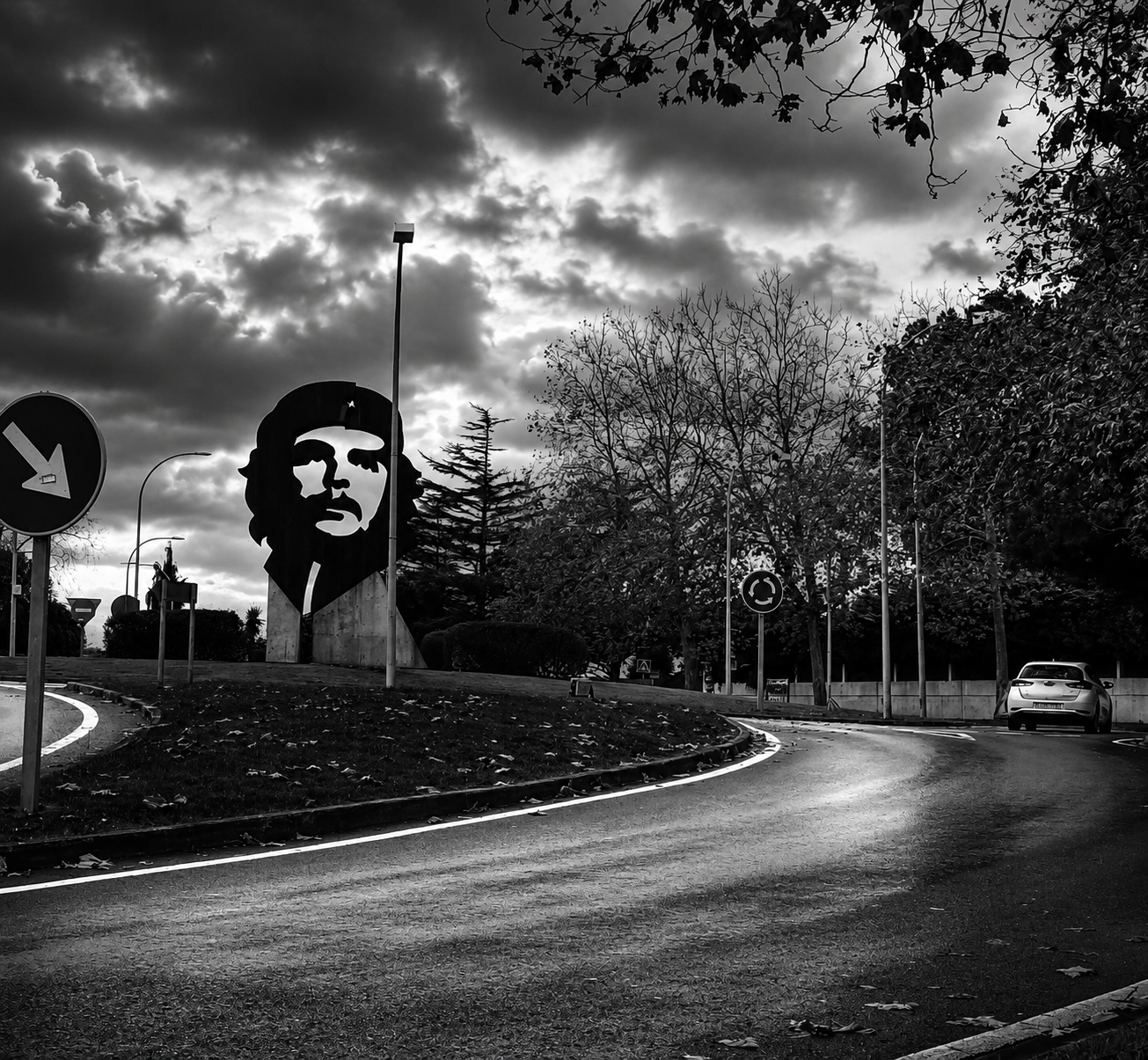
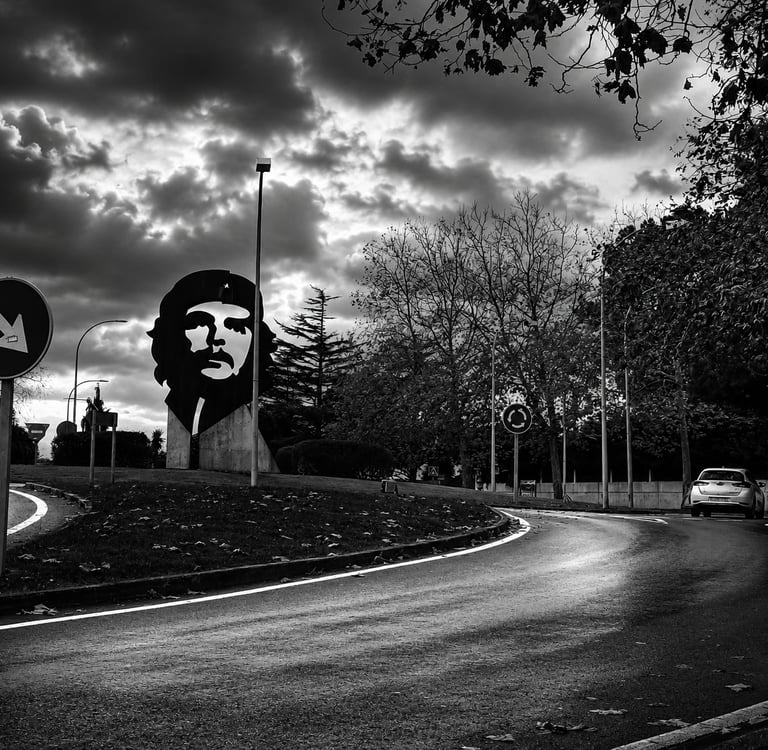
Oleiros is one of the most unusual municipalities in Spain. It is a wealthy coastal town in Galicia, close to A Coruña, but it is also governed by a lifelong radical whose political imagination belongs as much to the Cold War as to modern municipal management. Visitors driving along Avenida Ernesto Che Guevara are greeted by a large statue (estatua) of the Argentine revolutionary. In most rich suburbs, such symbolism would seem impossible, but in Oleiros it has become part of the town’s identity.
The town is not a poor revolutionary enclave. It is a comfortable residential municipality with beaches, parks, seaside trails, public pools, libraries, sports centers and expensive homes. Its wealth (riqueza) sits beside public slogans about Cuba, Palestine, anti imperialism and social justice. That contrast makes Oleiros fascinating. It is a place where affluent residents can live beside radical monuments and where conservative voters may still support a mayor who openly calls himself a red.
Oleiros lies in the province of A Coruña, in northwestern Spain, and is part of the wider metropolitan area around the city of A Coruña. Its location helps explain its rise. The municipality has a long coastline (costa) facing the Atlantic and the estuary, and many residents commute to the nearby city for work. Because it is close to urban employment while offering beaches and green space, it became an attractive residential area. But without planning, it could easily have become another overbuilt coastal suburb.
The man most associated with preventing that outcome is Ángel García Seoane, known locally as Gelo. He was born in Oleiros and became politically active while still young. As a teenager, he took part in labor organizing, and later he joined the Communist movement during a period when such activism (activismo) was still dangerous in Francoist Spain. Before becoming a political figure, he also worked as a musician, playing drums and accordion and even helping organize Galician musicians.
Gelo’s political story began during Spain’s transition from dictatorship to democracy. Before Franco died in nineteen seventy five, Oleiros was far smaller and more rural than it is today. The arrival of democracy, new roads and growing pressure from nearby A Coruña created a powerful opportunity (oportunidad) for developers. Plans emerged to cover parts of the town with high rise buildings and speculative construction. Local activists feared that beaches, public land and older village spaces would be lost to private profit.
In the late nineteen seventies, Gelo and other residents organized against uncontrolled development. Their movement became Alternativa dos Veciños, or The Neighbors’ Alternative, an independent local party. Its goal was not to freeze Oleiros in the past, but to guide growth (crecimiento) in a more public minded way. The party wanted water systems, schools, cultural centers, public spaces and orderly planning instead of chaotic speculation. This gave the movement a practical appeal beyond ideology.
Alternativa dos Veciños built its identity around local control. Its symbol was not the traditional socialist rose, but the daisy, a hardy and spreading flower. The movement argued that public planning (planificación) could protect common resources while improving everyday life. That message resonated in a town where residents feared losing beaches and village character to developers. Over time, the party turned a protest movement into a durable municipal machine.
Gelo first became mayor in nineteen eighty five. From the beginning, he refused to separate local government from wider political symbolism. Streets and public spaces in Oleiros honored Che Guevara, Galileo, Darwin, Abraham Lincoln, Simón Bolívar, Augusto Sandino, Jacobo Árbenz and Adolfo Suárez. This unusual memory (memoria) politics turned the town map into a political statement. In Oleiros, street names were not neutral labels, but declarations of historical loyalty.
The Che Guevara statue became one of the town’s most famous symbols. Installed in two thousand eight, it is an eight meter monument and has often been described as one of the largest Che statues in the world. The monument (monumento) reportedly cost around one hundred eighty thousand euros, a decision that critics saw as wasteful and supporters saw as consistent with Gelo’s politics. The statue became a national news story because it seemed to summarize Oleiros perfectly. A rich Galician suburb had built a giant monument to a Marxist guerrilla.
Yet Gelo’s popularity cannot be explained by symbolism alone. Oleiros invested heavily in practical public services and civic infrastructure. The town became known for parks, libraries, cultural facilities, municipal pools and sports centers. Its infrastructure (infraestructura) helped give residents a high quality of life. This mattered because voters could see physical results: cleaner streets, better facilities, protected beaches and accessible public spaces.
The town’s beaches are central to its identity. Santa Cristina, Bastiagueiro and Mera are among the best known, while smaller coves and coastal paths give the municipality a strong recreational appeal. These beaches are part of the town’s environment (medio ambiente) and also part of its political story. Protecting the coast from speculative development became one of the reasons Alternativa gained support. In a coastal region where uncontrolled construction has often damaged landscapes, Oleiros presented itself as a different model.
Santa Cruz Castle is another important local landmark. Built in the sixteenth century on a small island, the fort formed part of the defensive system after the English attack led by Sir Francis Drake against A Coruña. Under Oleiros’s local government, the castle (castillo) was transformed into an educational and environmental space rather than being turned into a casino or private attraction. This conversion reflects a wider pattern in the town. Old military, religious and elite properties have often been reclaimed for public use.
Gelo’s politics have always mixed municipal management with provocation. The town’s electronic billboards have displayed messages about international politics, including attacks on Donald Trump, Benjamin Netanyahu and United States foreign policy. These messages (mensajes) have brought Oleiros attention far beyond Galicia. Some residents may see them as embarrassing, while others view them as proof that their town refuses to be silent. For Gelo, a municipality can clean streets and still speak about war, imperialism and injustice.
His foreign policy activism has been consistent for decades. He has supported Cuba, Nicaragua, Palestine, Guatemala, the Sahrawi people and other anti colonial or left wing causes. Oleiros has also participated in international solidarity (solidaridad) projects and has dedicated part of its budget to cooperation with poorer regions. This is unusual for a municipality of roughly forty thousand people. Gelo treats internationalism not as decoration, but as a normal duty of local government.
Cuba has played a particularly important role in Gelo’s political imagination. He admired Fidel Castro and traveled to Cuba many times, especially after the Soviet collapse badly damaged the island’s economy. Oleiros even named Castro an honorary councilman. This relationship (relación) reached a symbolic high point when Castro visited Galicia in the early nineteen nineties with Manuel Fraga, the conservative Galician leader and former Franco era minister. The meeting between Castro, Fraga and Gelo captured the strange political theater of Galicia.
Gelo has also been involved in international campaigns closer to ordinary residents. Oleiros families have participated in programs that host Sahrawi children from refugee camps during the summer. The town has supported the Fondo Galego, a network of Galician municipalities that fund cooperation projects in the Global South. This cooperation (cooperación) gives Oleiros an international profile far beyond its size. For a small municipality, it has built a surprisingly global civic identity.
At home, Gelo’s style has often been confrontational. He has cursed opponents, staged dramatic protests and used humor to mock bureaucracy. In one famous episode, he brought donkeys to protest delays in improving public transport. His leadership (liderazgo) depends on directness, spectacle and conflict. Supporters see him as a mayor who fights for the town; critics see him as theatrical, abrasive and sometimes reckless.
The most controversial part of his record involves demolitions. Gelo became famous for taking action against illegal or unauthorized buildings, including constructions that occupied public or protected land. In nineteen eighty nine, he personally participated in the demolition of an illegal beach house using explosives. This demolition (demolición) created legal consequences and helped build his reputation as a politician willing to go further than most mayors. It also gave opponents a way to portray him as dangerous or authoritarian.
The legal battles did not destroy him. After a long case, he was banned from serving as mayor for six years and one day, but his political movement continued to govern. The sentence (sentencia) became part of his mythology, especially because he framed it as punishment for defending public property. When he left office temporarily, he promised to return, and he eventually did. His supporters saw the ban not as proof of failure, but as proof that powerful interests had tried to stop him.
Another later controversy involved the Casa Carnicero, a historic building damaged by fire and later demolished. Prosecutors accused Gelo and a municipal technician of wrongdoing connected to heritage protection, but the case ended with an acquittal. The mayor argued that the building was dangerous and that the decision was about public safety (seguridad). The episode showed that even decades into his career, Gelo’s methods continued to generate legal and political conflict.
Oleiros’s urban model has also produced major social contradictions. The town attracts wealthy residents, including people connected to the Inditex fortune and other major Spanish businesses. Its millionaires (millonarios) benefit from the same parks, beaches and public services as everyone else. This gives the municipality a peculiar class structure. Radical public symbols coexist with some of the largest private fortunes in Spain.
The presence of wealth has strengthened the town’s finances. Higher incomes and property values give Oleiros a strong tax base, which helps fund services and infrastructure. But this prosperity (prosperidad) also creates problems. Housing costs rise, younger families struggle to buy or rent, and inequality becomes more visible. Oleiros is often described as one of Galicia’s richest municipalities, but richness does not mean equal access to housing or opportunity.
Housing policy is therefore one of the most important parts of the Oleiros story. The municipality has promoted protected housing and price limited homes to prevent the town from becoming only a refuge for the wealthy. Over four decades, the local government has built more than one thousand protected units. This housing (vivienda) effort matters because the town’s attractiveness creates pressure from developers, second home buyers and short term rental investors. Without intervention, many local residents could be priced out.
Tourist apartments and short term rentals have become another battleground. Like many desirable coastal and urban areas in Spain, Oleiros faces pressure from platforms such as Airbnb and from investors who see housing as a financial asset. The town has tried to restrict the sale of tourist apartments and defend residential stability (estabilidad). This connects Oleiros to a wider Spanish debate about housing, tourism, affordability and the right to live in one’s own community.
Oleiros is also connected to the broader economic geography of Galicia. The nearby municipality of Arteixo is home to Inditex, the parent company of Zara, and the region includes some of Spain’s most important private fortunes. This proximity helps explain the concentration of capital (capital) around Oleiros. But it also sharpens the contradiction between Gelo’s anti capitalist language and the wealthy residents whose taxes help sustain public services. The mayor has turned that contradiction into a working arrangement rather than trying to hide it.
Environmental protection is another pillar of the local model. The town has preserved coastal ecosystems, created parks and invested in green public space. Its sustainability (sostenibilidad) policies have helped strengthen its reputation as a high quality place to live. For residents, this is not abstract ideology. It appears in accessible beaches, walking paths, gardens, sports areas and public facilities. The result is a kind of everyday environmentalism built into local life.
Oleiros also benefited from careful use of public money. During Spain’s financial crisis, many municipalities struggled with debt, corruption or poor planning. Oleiros, by contrast, used state funds to improve public resources, encourage small business activity and complete long planned projects. This management (gestión) helped the town weather difficult economic years better than many places. Gelo’s defenders often argue that his radical politics are matched by fiscal discipline.
The town’s success, however, raises a difficult question. Can a model built around one dominant personality survive after that personality leaves? Gelo is now in his seventies and has already postponed retirement. His legacy (legado) depends not only on monuments and billboards, but on institutions capable of lasting beyond him. Alternativa dos Veciños has expanded to nearby councils, but Oleiros remains its emotional and political center. Post Gelo politics will test whether the project is a system or a one man phenomenon.
The rise of the far right in Spain gives Gelo another reason to remain active. He has said that Alternativa wants to defend Oleiros from the growth of Vox and from nostalgia for Francoism. This polarization (polarización) gives his local politics a national meaning. Even in a wealthy municipality where many residents vote conservative in regional and national elections, Gelo believes his practical record can keep extremist politics from gaining ground. He trusts some right wing voters, but not the authoritarian right.
Oleiros therefore resists simple labels. It is rich but redistributive, suburban but radical, comfortable but confrontational. Its contradictions (contradicciones) are not accidental; they are the heart of the story. The town shows that local politics can create strange alliances when public services work. A resident may disagree with the mayor’s foreign policy posters and still vote for clean streets, beaches, libraries and controlled development.
The broader lesson is that municipal politics can be more flexible than national ideology. A town government can shape daily life through zoning, housing, public works, parks, schools and local services. Oleiros’s experiment (experimento) proves that voters often judge leaders by visible outcomes as much as by political labels. It also shows that radical symbolism does not automatically prevent a town from attracting wealth. In this case, it may even be part of the town’s unusual brand.
Whether Oleiros can be copied elsewhere is uncertain. Its success depends on location, timing, wealth, charismatic leadership, strong local identity and decades of consistent planning. Still, its example (ejemplo) matters because it challenges the idea that rich suburbs must be politically bland or purely private. Oleiros has used public power to shape land, memory and services. In doing so, it has become one of Spain’s strangest and most revealing local political stories.
Key Spanish Vocabulary
estatua statue
riqueza wealth
costa coastline
activismo activism
oportunidad opportunity
crecimiento growth
planificación planning
memoria memory
monumento monument
infraestructura infrastructure
medio ambiente environment
castillo castle
mensajes messages
solidaridad solidarity
relación relationship
cooperación cooperation
liderazgo leadership
demolición demolition
sentencia sentence
seguridad safety
millonarios millionaires
prosperidad prosperity
vivienda housing
estabilidad stability
capital capital
sostenibilidad sustainability
gestión management
legado legacy
polarización polarization
contradicciones contradictions
experimento experiment
ejemplo example
For enquiries or suggestions: pr@instituto-espanol.com
Come visit Spain!
© Copyright 2026 Instituto Español
Learn the official language of Spain in 30 days thanks to the most complete Grammar, Vocabulary and Culture courses available. Start speaking Spanish today!