
Russian Shipwreck Near Spain Raises Questions About Secret Military Cargo
The sinking of the Ursa Major in the Mediterranean has become more than a maritime accident after Spanish documents suggested the vessel may have carried nuclear reactor components
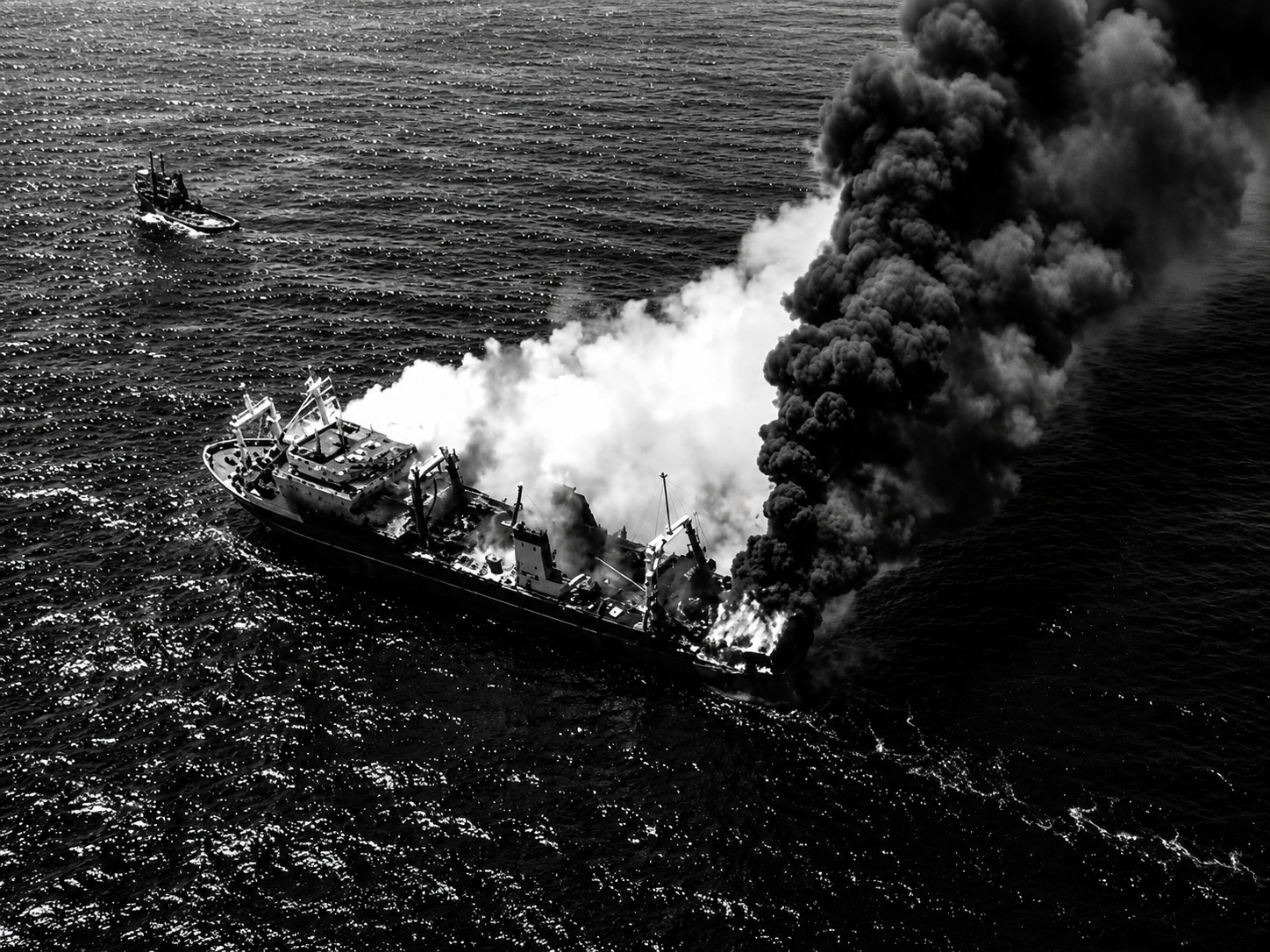
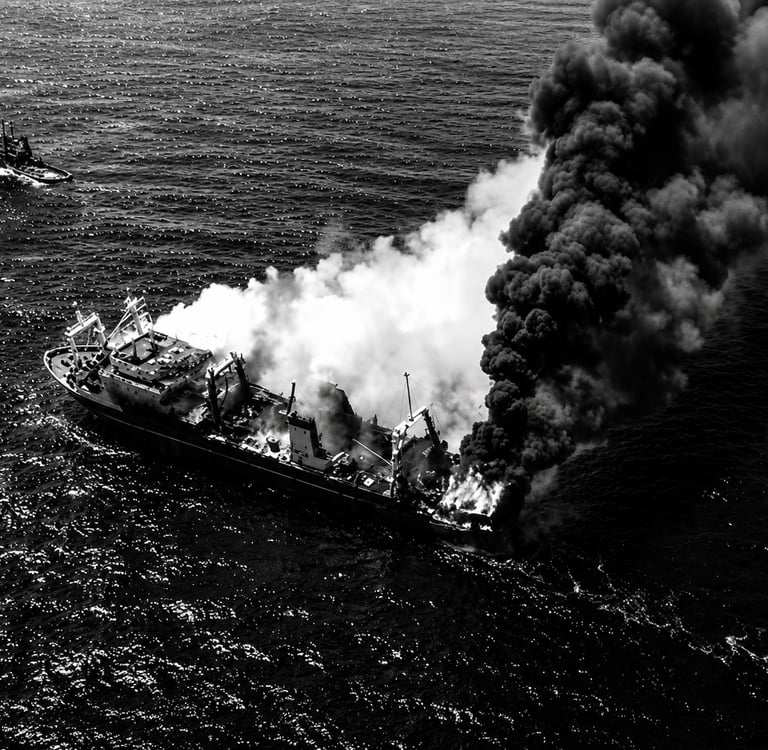
A Russian cargo ship that sank in the Mediterranean Sea near Spain has drawn renewed attention after a Spanish government document suggested that it may have been carrying parts for nuclear reactors used in submarines. The vessel, named the Ursa Major, went down on December 23, 2024, in waters between Spain and Algeria after an explosion in its engine room. Two crew members were lost, while 14 others were rescued by Spanish maritime services and brought to safety. The possible cargo (carga) has turned the incident from a tragic shipping accident into a case with military, diplomatic, and security implications.
The Ursa Major had reportedly been travelling from St. Petersburg to Vladivostok, Russia’s far eastern port, when the disaster occurred. Russian sources initially described the ship as carrying port cranes, containers, and heavy industrial equipment. However, a later Spanish government response to opposition lawmakers stated that the ship’s captain told Spanish port authorities that the vessel carried components for two nuclear reactors similar to those used in submarines. This alleged confession (confesión) has raised questions about what was really aboard the ship and why the cargo was being moved through the Mediterranean. The document was registered by Spain’s parliament in February 2025 and later reported by international media.
The Spanish government document did not say that the ship was carrying nuclear fuel. This distinction is important because reactor components and radioactive material are not the same thing. If the cargo consisted only of metal parts, casings, covers, or other reactor related elements, the environmental and radiological risk would be very different from a shipment containing enriched uranium or spent fuel. Still, the possible presence of components (componentes) related to submarine reactors would be politically sensitive because such equipment may be connected to military or strategic naval programmes. Even without nuclear fuel, the cargo could raise concerns about sanctions, export controls, and Russian military logistics.
At the time of the sinking, Spanish authorities were unable to inspect the ship’s cargo directly. The wreck lies at a depth of roughly 2,500 metres, making recovery or examination extremely difficult without specialised deep sea equipment. Rescue teams focused first on saving survivors, containing the immediate emergency, and coordinating with nearby vessels. The great depth (profundidad) of the wreck means that many questions may remain unanswered for a long time. Unless a state or specialised agency decides to mount an expensive underwater operation, investigators may have to rely on documents, testimony, tracking data, and intelligence rather than physical inspection.
The Ursa Major was owned by Oboronlogistika, a Russian state linked shipping company established under Russia’s defence ministry. The company has been placed under United States and European Union sanctions because of its ties to Russia’s military and its role in transporting cargo connected to Russian strategic interests. Western governments have accused Russian defence linked logistics networks of helping move military or dual use goods despite restrictions imposed after the full scale invasion of Ukraine. The ship’s owner (propietario) therefore matters because this was not an ordinary commercial vessel operating in a politically neutral context. Its links to Russia’s military supply system make the cargo allegations more serious.
Oboronlogistika claimed after the sinking that the Ursa Major had been sabotaged. According to the company, three powerful explosions damaged the vessel above the waterline in what it described as a terrorist attack. Russian officials and state media repeated claims that the ship had suffered a deliberate attack, although independent confirmation has remained limited. The allegation of sabotage (sabotaje) added another layer of uncertainty to an already unusual case. If the ship was attacked, investigators would need to ask who had the capability and motive; if it was not attacked, they would need to determine whether mechanical failure, unsafe cargo, or another cause led to the explosion.
The route of the Ursa Major also attracted attention. A ship travelling from St. Petersburg to Vladivostok would normally need to pass through the Mediterranean, the Suez Canal, the Indian Ocean, and onward toward East Asia, unless it used northern routes that are limited by ice and season. This made the journey possible in practical terms, but the military sensitive allegations surrounding the cargo have encouraged speculation about its final purpose. The route (ruta) through the Mediterranean placed the ship close to NATO countries, European maritime monitoring systems, and politically sensitive waters. In an era of heightened tensions between Russia and the West, even a cargo route can become a subject of suspicion.
The case also shows how difficult it can be to understand the movement of dual use goods. Some industrial parts can have civilian applications, military applications, or both, depending on their design, destination, and end user. Reactor components are particularly sensitive because they can be associated with nuclear energy, icebreakers, submarines, or other specialised vessels. The issue of dual use (doble uso) equipment is central to sanctions enforcement because governments must decide whether a shipment is ordinary industrial trade or a way to support military capability. The uncertainty surrounding the Ursa Major’s cargo fits into this broader problem.
The timing of the new revelations increased political interest in Spain. The Spanish government’s written response to lawmakers became public after media organisations reported on the parliamentary document and the captain’s alleged statements. Opposition politicians had asked what the government knew about the sinking, the cargo, and any potential danger to Spanish waters. The parliament (parlamento) became the channel through which details reached the public. This shows how maritime incidents involving foreign military linked vessels can become domestic political issues when they occur near national territory.
For Spain, the incident involved several responsibilities at once. Spanish rescue services had to respond to the emergency, save survivors, coordinate maritime safety, and assess whether the sinking created environmental or security risks. Cartagena and other Spanish maritime authorities also had to handle the rescued crew and the information they provided after the accident. The rescue (rescate) operation was therefore both humanitarian and investigative. Saving lives came first, but the questions raised afterward required legal, diplomatic, and security attention.
The environmental dimension of the sinking remains separate from the political controversy. Any large vessel that sinks can pose risks from fuel, lubricants, machinery, and cargo, even if it does not carry radioactive material. Because the Ursa Major lies deep underwater, monitoring the wreck may be difficult, and immediate recovery is unlikely. The possible risk (riesgo) depends heavily on what was truly aboard and whether any dangerous substances were present. The Spanish document reportedly stated that the captain said there was no nuclear fuel, which would reduce the most serious radiological concerns, but it would not remove all environmental questions.
International reactions have been cautious because many facts remain uncertain. The Kremlin declined to comment directly on the claim that reactor components were aboard, while Russian linked sources maintained the sabotage narrative. Western media focused on the contradiction between the public description of the cargo and the alleged statement made by the captain to Spanish authorities. The lack of transparency (transparencia) is one reason the story has continued to attract attention. When a sanctioned defence linked vessel sinks near European waters and its cargo is unclear, silence naturally fuels speculation.
The sinking also fits into a wider pattern of scrutiny over Russian maritime activity. Since Russia’s full scale invasion of Ukraine, Western governments have paid closer attention to Russian ships, shadow fleets, military logistics, sanctions evasion, and movements through strategic sea lanes. Civilian looking vessels can sometimes carry goods connected to military supply chains, while sanctioned companies may use complex ownership structures to keep operating. The Ursa Major’s sanctions (sanciones) history makes it part of this larger maritime security picture. Even if the ship’s voyage was legal under some interpretation, its connections made it a vessel of interest.
The case may never produce a simple public answer. The wreck is deep, the cargo is disputed, the owner is sanctioned, and the geopolitical context is highly sensitive. Investigators may have access to documents, survivor testimony, satellite data, port records, and intelligence, but the public may see only fragments. The central mystery (misterio) is whether the Ursa Major was carrying ordinary heavy equipment, sensitive reactor components, or a mixture of both. Until more evidence is released, the sinking will remain a reminder that modern maritime trade can hide strategic secrets beneath the appearance of normal cargo movement.
Key Spanish Vocabulary
carga cargo
confesión confession
componentes components
profundidad depth
propietario owner
sabotaje sabotage
ruta route
doble uso dual use
parlamento parliament
rescate rescue
riesgo risk
transparencia transparency
sanciones sanctions
misterio mystery
For enquiries or suggestions: pr@instituto-espanol.com
Come visit Spain!
© Copyright 2026 Instituto Español
Learn the official language of Spain in 30 days thanks to the most complete Grammar, Vocabulary and Culture courses available. Start speaking Spanish today!